A legacy without borders: the international expansion of the Rafa Nadal Academy

ARN Publishing House

Thousands of kilometres separate the Rafa Nadal Academy in Manacor from the Academy in Kuwait, and from the Tennis Centers in Mexico, Greece, Hong Kong, Marbella, and the Dominican Republic. In the coming years, that distance will become even greater with the opening of new centers in Brazil and Indonesia. However, anyone walking through the doors at any of them will find the same approach to training, education, values and care for players. Because exporting a brand is relatively simple. The difficulty comes in transferring a way of working.
For Rafa Nadal the philosophy based on the model developed over the years in Mallorca must also form the foundations on which the project continues to grow on an international level. “The Rafa Nadal Academy is a very personal project. With the experience we have in tennis and following the same approach we employ at the Academy in Manacor, we believe it will also be a significant attraction in the places where these projects will be based”, said Rafa of the origins of the international expansion.
This is the challenge faced every day by the Rafa Nadal Academy’s expansion team; growing the project into new markets while guaranteeing that every new project opened maintains the essence, the methodology and the standards developed in Manacor.
For Joan Suasi, the Director of International Expansion at the Rafa Nadal Academy, the growth of the network is part of a strategy that goes far beyond just opening new centers:
“Our goal is not to be present in as many countries as possible, but to find projects and partners that share our vision and allow us to transfer the methodology and values of the Rafa Nadal Academy while maintaining the same standards we have in Manacor. Every market is different and every project has its peculiarities, but there is one thing that cannot change: our DNA, our way of understanding the sport and our care for the players”.
The international expansion began in 2019 with the inauguration of the Rafa Nadal Tennis Center Costa Mujeres, in Mexico, a collaboration with the Palladium Hotel Group. It was the first project that took the methodology developed in Mallorca outside of Spain and it marked the start of a new era for the Academy.
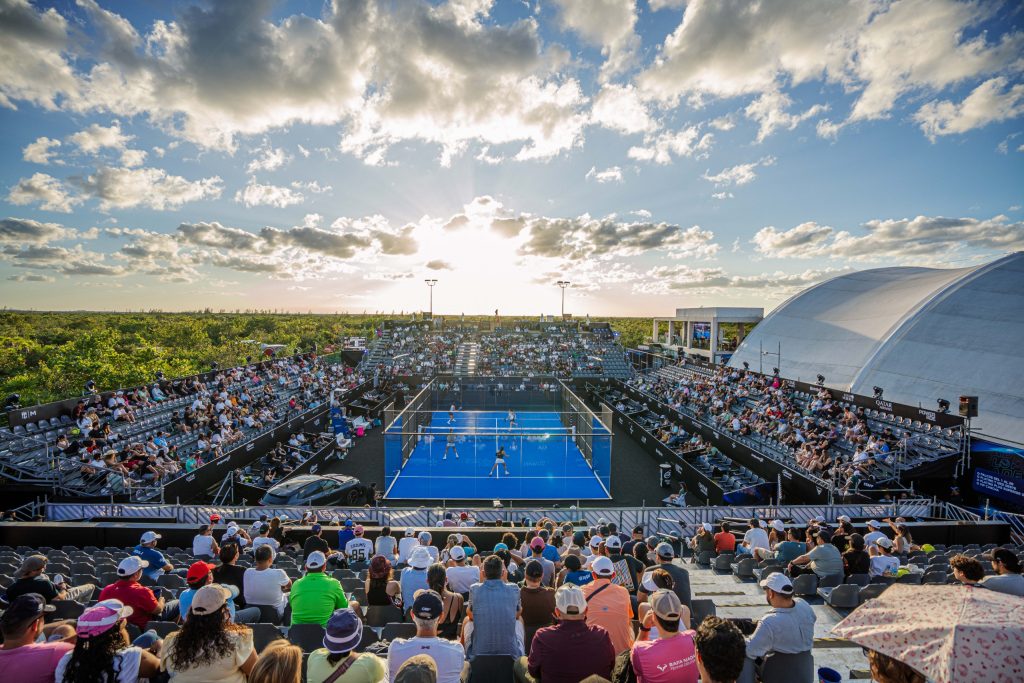
It is a moment that Maribel Nadal, Deputy General Manager of the Rafa Nadal Academy, remembers fondly:
“Although all of our centers are equally important to us, the opening of the first will always be remembered with particular affection. We prepared an inauguration event that was well attended, both by invitees and local institutions and media. We travelled to Mexico with Rafa, part of the team and the family, it was beautiful to be able to share such an important moment together. It was, without a doubt, a milestone for the Academy and the start of a new era that we were embarking on with great excitement”.
Located in a luxury tourist complex (Grand Palladium Select Costa Mujeres and TRS Coral), the center allowed the tennis and the values of the Rafa Nadal Academy to be taken to thousands of players and fans from all over the world.

The second step came just a few months later with the opening of the Rafa Nadal Tennis Center in Sani, in Greece. Forming part of the exclusive Sani Resort, this project consolidated a model that combines sports tourism and coaching in some of the most prestigious holiday destinations in the Mediterranean. Two different centers, one philosophy.
The next big leap came in 2020 with the inauguration of the Rafa Nadal Academy in Kuwait, the first international academy outside of Manacor. Conceived as a standard bearer for the Middle East, it reproduces the sporting model from the original academy and boasts first-class facilities that include 16 tennis courts, a 1,500 seater stadium, inaugurated by Rafa Nadal himself with an exhibition with David Ferrer. Its opening confirmed that the methodology of the Academy could also form part of large permanent projects.
The international presence continued to grow with the arrival of the Rafa Nadal Tennis Center Hong Kong, a strategic project that bolstered the Academy’s presence in Asia and allowed the methodology to be taken to one of the fastest growing sports markets on the continent.
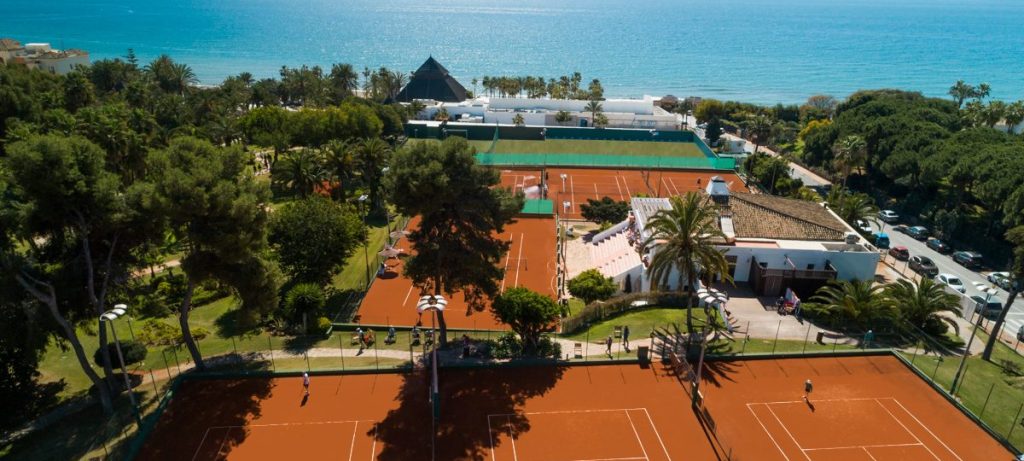
In 2025, the project returned to Spain with a new concept. The Rafa Nadal Tennis Center in Marbella, located in the renovated Hotel Don Carlos, combines seven clay courts, two padel courts with views of the Mediterranean, and a permanent exhibition with some of the most emblematic trophies of Rafa Nadal’s career. The space was conceived to allow residents and visitors alike to enjoy the experience of training at the Academy in one of the country’s main tourist destinations.
That same year, the Dominican Republic opened its doors to a new Rafa Nadal Tennis Center within the Meliá Hotels International complex, thus expanding the Academy’s presence in the Caribbean.

Furthermore, in 2024, a Rafa Nadal Tennis Program began in Egypt, for the first time taking the training methodology to Uppingham Cairo, a hugely prestigious international school located in the country’s capital.
And the expansion will not stop there. The next major milestone will come in 2027 with the opening of the new Rafa Nadal Tennis Center Bahrain, followed in 2028 by the first Rafa Nadal Tennis Center in South America, located in Porto Belo, Brazil. The complex will feature 17 tennis courts, eight padel courts, a gym, a sports shop and training programmes for players of all ages and abilities, making it one of the largest international facilities in the Rafa Nadal Academy network.
That same year will be the turn of Lombok (Indonesia). The new Tennis Center, integrated within the exclusive Samara Lombok complex, will feature eight tennis and padel courts and will bring the Rafa Nadal Academy’s methodology to Southeast Asia for the first time.
However, after each of these new openings there are months –sometimes even years – of work that goes unnoticed after the ribbon is finally cut. It is not simply a question of designing some facilities and choosing coaches. Every project undergoes specific training, working procedures, technical support and permanent monitoring from Mallorca to guarantee that the player experience maintains the standards of the Rafa Nadal Academy, whatever country it may be in. Converting that vision into reality requires permanent coordination work between Manacor and each of the international centers.

Amalia Riera, the International Projects Operations Director, forms part of that team and nobody knows better than her what goes on when a new center opens its doors: “Our job consists of working alongside our partners to guarantee that each of them reflects the standards, the methodology and the values of the Rafa Nadal Academy. We act as a link between the various teams in Mallorca and each project, coordinating the support required for their development and evolution. As time goes by you build a very close relationship with each of them. Trust and open communication are essential for me, because when we share the same goal and work as one team, that’s when we really get every center to achieve its full potential”.
“Our job consists of working alongside our partners to guarantee that each of them reflects the standards, the methodology and the values of the Rafa Nadal Academy. We act as a link between the various teams in Mallorca and each project, coordinating the support required for their development and evolution. As time goes by you build a very close relationship with each of them. Trust and open communication are essential for me, because when we share the same goal and work as one team, that’s when we really get every center to achieve its full potential”.
This constant communication has led to the development of an international network where distance is no object. The teams share knowledge, methodologies and experiences so that a player training in Mexico, Kuwait, Hong Kong, the Dominican Republic, etc., will find the same level of demands, the same personalised care and the same philosophy as in Manacor.
After accompanying so many openings, Amalia admits that she still gets emotional at the exact same moment. Having overseen so many inaugurations, Amalia admits that she still gets emotional at the same point.
“Every opening has something unique, but the most emotional moment is watching a project on which we’ve been working for months, or even years, come to life and start to welcome its first clients. It’s the best payback for the joint work of many people”.
The international dimension of the project is also a reflection of its capacity to host first-rate competitions. The Rafa Nadal Academy Kuwait was one of the venues for Kuwait City Premier Padel P1 and for the historic first edition of the FIP World Cup Pairs, while the Rafa Nadal Tennis Center Costa Mujeres has hosted Premier Padel Cancún P2 for two consecutive years. Meanwhile, the Marbella center’s calendar includes official ITF World Tennis Masters Tour tournaments, thus consolidating the network of centers that provide the stage for big international events in both tennis and padel.
This international expansion represents much more than a presence in new markets. It is proof that a methodology can cross borders without losing its identity. The goal remains intact; to offer each player, whatever their age, wherever in the world they may be, the same experience and the same values that have allowed the Rafa Nadal Academy to set the international standard.
Quizás te puede interesar


Join our community!
Stay up to date with the best of tennis and enjoy exclusive promotions and events at the Rafa Nadal Academy. Subscribe!